
Made with  2019-2020. Personalized eAssistant Services - All Rights Reserved
The Facebook Marketplace Scam That Almost Looked Real
- August 21, 2026
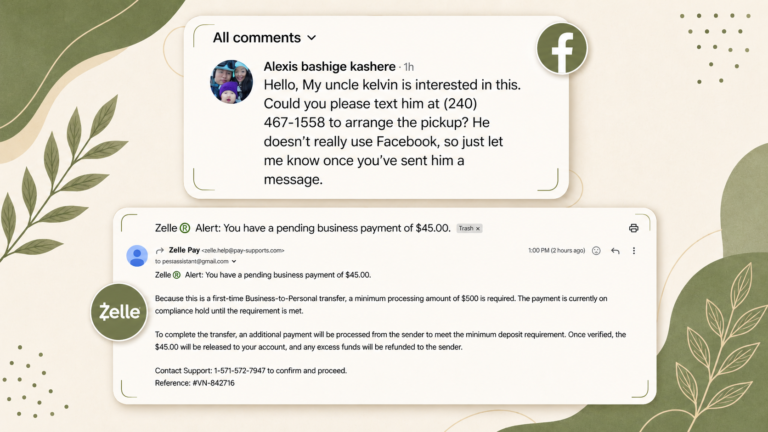
I listed an item for sale on Facebook Marketplace and received a message from someone who seemed like a serious buyer.
We agreed on a pickup time, but I decided not to share my address until they confirmed they were on their way. That small boundary ended up protecting me from a very convincing scam.
The buyer offered to pay through Zelle before picking up the item. A few minutes later, I received an email that looked official. It claimed that the payment could not be completed because it had been sent from a business account to my personal account.
The email included a customer service number, so I called. At first, everything sounded believable, but the representative did not properly identify the company. Then they asked where I banked.
That was the moment I knew something was wrong.
When I said it sounded like a scam, the caller became insulting and hung up. The buyer, the payment and the customer service number were all part of the same setup.
Scammers are becoming more polished. Their messages may look professional, their stories may sound reasonable and their emails may appear legitimate. The same risks exist in business when we receive payment requests, invoices, login links or messages asking for private information.
1. Protect your information
Do not share your address, banking information, passwords or verification codes until you know exactly who you are dealing with.
2. Verify through official channels
Do not call the number included in a suspicious email. Open the official app or website and confirm the transaction there.
3. Trust the pause
A professional business will not pressure, threaten or insult you. When something feels wrong, stop the conversation and verify before taking another step.
Being organized in business is not only about systems and productivity. It is also about creating safeguards that help us slow down, pay attention and protect what we have built.